Choosing the Best Food for Your Goldendoodle
Goldendoodles range from petite to standard, so one bag does not fit every dog. We compare label data, including AAFCO statements, ingredients and calories, so you can read the aisle with confidence.
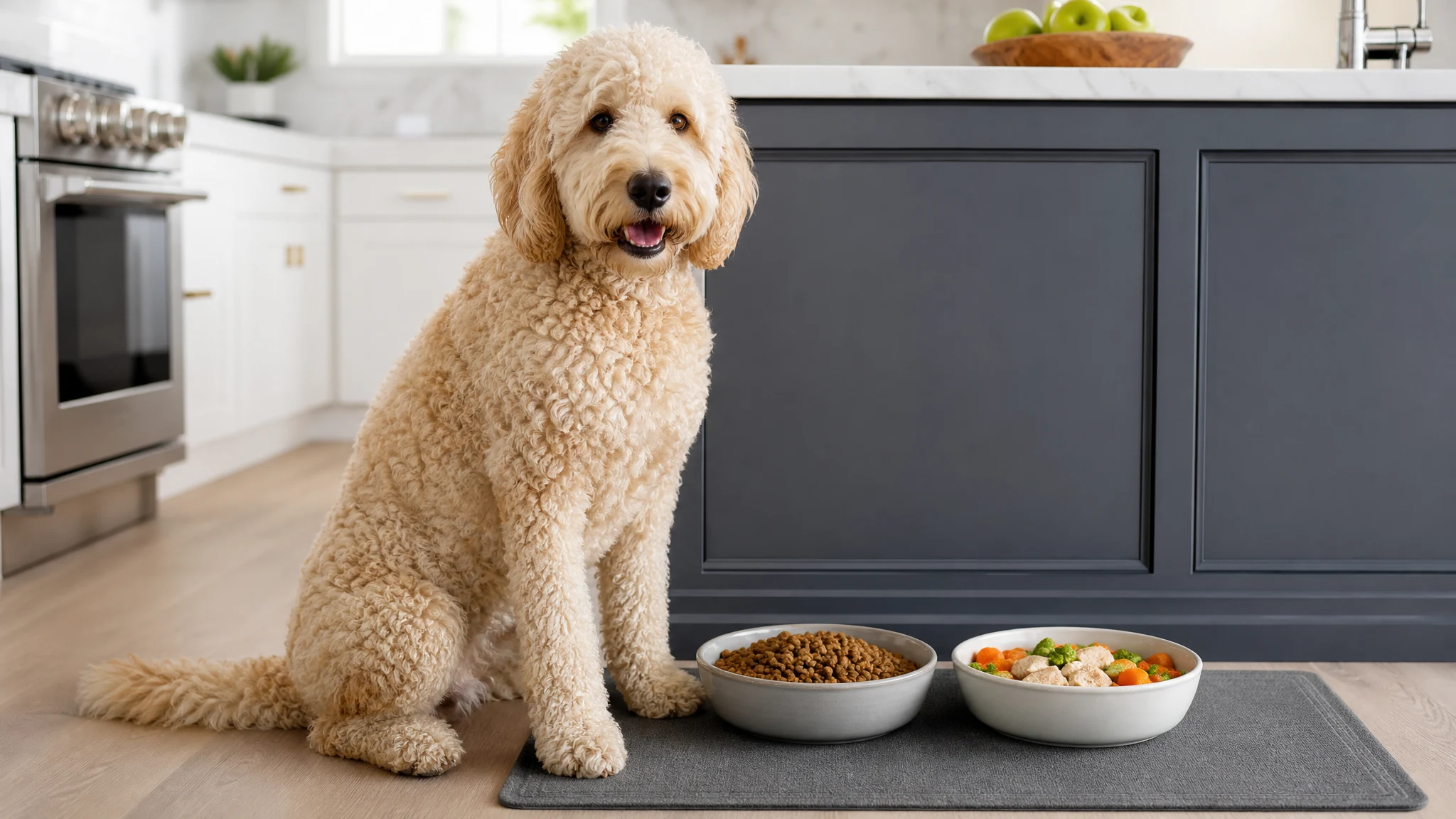
Food Guides by Size and Life Stage
Each guide explains what a label says, what it leaves out, and what to ask your veterinarian.
Best foods
Foods compared by label data: AAFCO statement, protein, fat and calories.
- Best Food for Dog Gut Health: Ranked by Label Data for Goldendoodles
- Iams Proactive Health Dog Food for Goldendoodles: How It Compares on the Label
- Dog Food for Gut Health: A Label Comparison for Goldendoodles
- Top Dog Food Picks for Goldendoodles by Life Stage
- Best Dog Foods With Probiotics for a Goldendoodle's Gut Health
Feeding
How much and how often to feed, by age and weight.
Nutrition and health
The diet questions that matter for this breed.
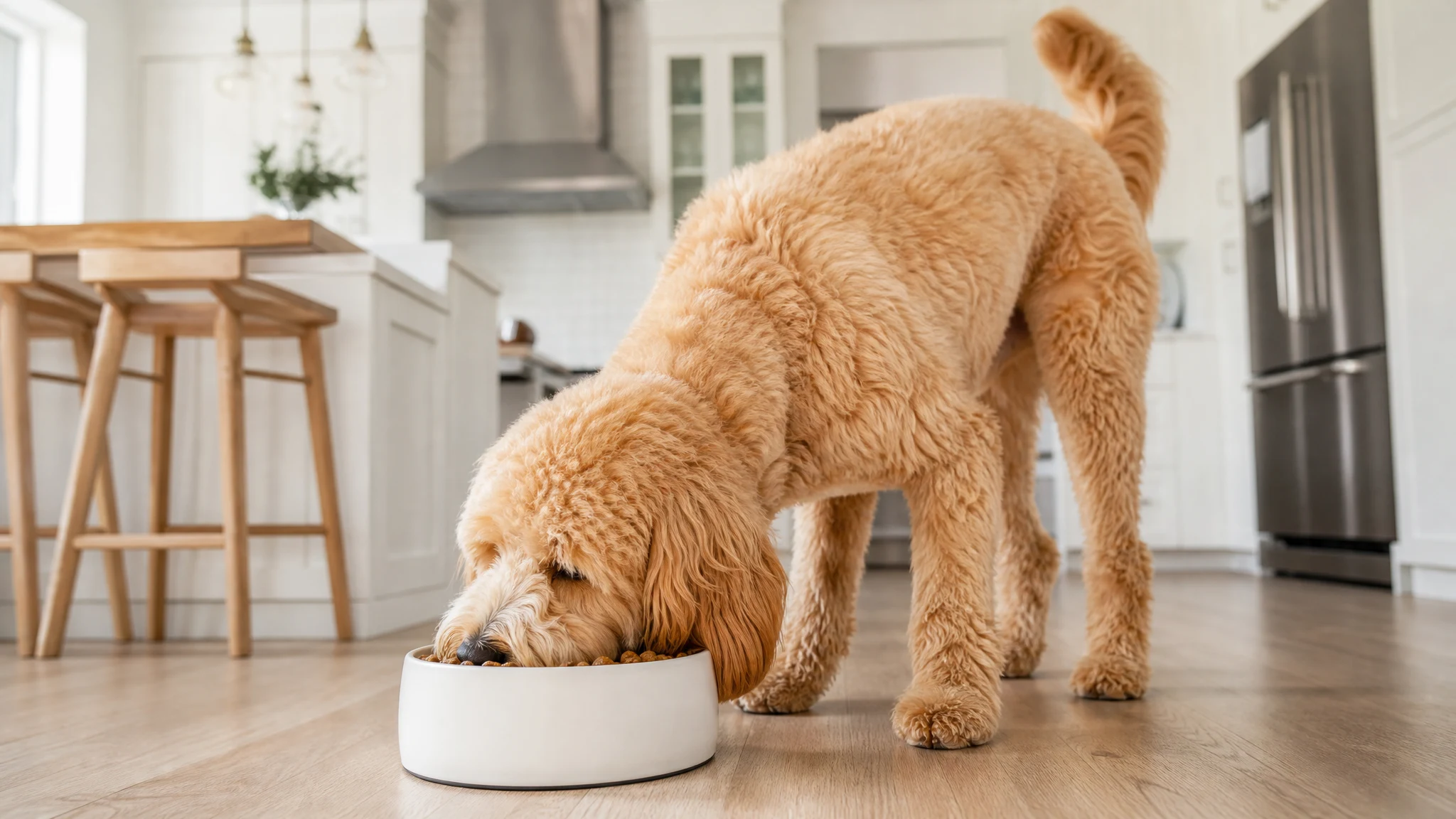
Foods for Goldendoodles, compared by label
Protein and fat as each brand publishes them: guaranteed minimums from the label (as fed), or the dry-matter averages some brands publish instead, marked as such. We compare labels; we do not run feeding trials. Your veterinarian should choose the food for a dog with a health condition.
| Food | Form | Life stage | Protein / fat | Calories |
|---|---|---|---|---|
| Royal Canin Size Health Nutrition Large Puppy Dry Dog Food | dry | Puppy (large breed puppies, adult weight 56 - 100 lb, up to 15 months old) | 28.0% / 14.0% | 349 kcal ME per cup (3638 kcal ME/kg) |
| Hill's Science Diet Puppy Large Breed Chicken & Brown Rice Recipe | dry | Large breed puppies (over 55 lbs when adult) up to 18 months old | 26.3% / 15.4% | 391 kcal/cup (3628 kcal/kg) |
| JustFoodForDogs Chicken & Rice Recipe | fresh | All life stages including growth of large size dogs | 8.0% / 3.0% | not stated per cup; 43 kcal ME/oz (1530 kcal ME/kg); 774 kcal ME per 18 oz |
| Nom Nom Turkey Fare | fresh | All life stages including growth of large size dogs | 9% / 4% | 244 kcal per cup (1 cup, 8 oz measuring cup = 188 g) |
| Hill's Science Diet Puppy Small & Mini Chicken & Brown Rice Recipe | dry | Puppies up to 1 year old and pregnant or nursing dogs | 28.9% / 19.7% | 418 kcal/cup (3780 kcal/kg) |
| Royal Canin Size Health Nutrition Medium Adult Dry Dog Food | dry | Adult (medium breed dogs 23 to 55 lb, over 12 months old) | 23.0% / 12.0% | 340 kcal ME per cup (3616 kcal ME/kg) |
| Royal Canin Size Health Nutrition Large Adult Dry Dog Food | dry | Adult (large breed dogs 56 to 100 lb, over 15 months old) | 24.0% / 15.0% | 360 kcal ME per cup (3755 kcal ME/kg) |
| Hill's Science Diet Adult Large Breed Chicken & Barley Recipe | dry | Large breed adult dogs 1 - 5 years of age with an ideal weight of 55 - 110 lbs | 23.8% / 15% | 365 kcal/cup (3675 kcal/kg) |
| Hill's Science Diet Adult 6+ Large Breed Chicken Meal, Barley & Rice Recipe | dry | Large breed adult dogs 6+ years of age with an ideal weight of 55 - 110 lbs | 18.7% / 13.5% | 352 kcal/cup (3550 kcal/kg) |
| Hill's Science Diet Adult Chicken & Barley Entrée | wet | Adult dogs 1 - 6 years of age | 26.7% / 16.7% | 369 kcal per 13 oz (370 g) can |
What matters when feeding Goldendoodles
Breed facts that change what and how much to feed, with sources.
| Adult weight | Petite Mini: under 14 in, typically 25 lb or less, Mini: 14-17 in, typically 26-35 lb, Medium: 17-21 in, typically 36-50 lb, Standard: over 21 in, typically 51 lb or more source |
| Size | Varies with the Poodle parent and generation: petite mini and mini are small, medium is medium, standard is large (51 lb or more; some can reach the AAFCO 70 lb large-size threshold). Height, not weight, decides the GANA size. source |
| Switch to adult food | Depends on size. Royal Canin labels its Large Puppy food for large-breed puppies up to 15 months old (brand source) | Hill's labels its Large Breed puppy food for large-breed puppies up to 18 months old (brand source) | Royal Canin labels its Medium Adult food for medium-breed dogs over 12 months old (brand source) source |
| Diet-related health topics | Golden Retriever parent: UC Davis found taurine-deficient DCM in golden retrievers, 23 of 24 of whom had been fed grain-free, legume-rich or combination diets | Golden Retriever parent: breeders screen for elbow and hip dysplasia | GANA requires hip, elbow, heart, patella and eye results submitted to OFA for its… source |
Goldendoodle Feeding Questions, Answered
How big will my Goldendoodle get, and does it change the food?
It depends on the Poodle parent and generation. The Goldendoodle Association of North America lists petite minis at 25 lb or less, minis at 26-35 lb, mediums at 36-50 lb and standards at 51 lb or more. Choose food by expected adult size, and ask your veterinarian if your dog's size is uncertain.
Does a standard Goldendoodle puppy need large-breed puppy food?
Possibly. The Merck Veterinary Manual says growth foods must state either 'including' or 'except for' growth of large-size dogs (70 lb or more as an adult), and excess calcium matters most for large, growing dogs. Check that wording on the label, and let your veterinarian decide for your puppy.
Should I avoid grain-free food?
The picture is unsettled, and we don't claim grain-free food causes heart disease. FDA began investigating DCM reports in July 2018, many involving grain-free foods, and its last public update was December 23, 2022. UC Davis studied golden retrievers, a parent breed. Your veterinarian can weigh this for your dog.
How much should I feed?
Start with the feeding guide on the bag, then adjust to your dog's body condition. As an example, Hill's lists 3 1/4 cups a day for a 50 lb dog on its Adult Large Breed food. Treat any chart as a starting point, and ask your veterinarian, since the American Kennel Club notes Golden Retrievers can become overweight.
How did you compare the foods?
We compared label data from brand pages: AAFCO statements, first ingredients, guaranteed analysis or dry-matter averages, and calories. We did not run feeding trials or taste tests. Some brands, like Hill's, publish dry-matter averages instead of a guaranteed analysis, so numbers are not always directly comparable.
How we compare foods
We read each food's published label: the AAFCO nutritional adequacy statement, the guaranteed analysis, the calorie statement and the ingredient list, from the brand's own page. We note which life stage each food is formulated for and whether it covers large-breed growth. We do not test foods on dogs, accept payment from brands or earn commission on these foods. More on our method.
General nutrition information compiled from product labels and published sources, not veterinary advice. Your veterinarian is the right person to choose a diet for your dog, especially one with a health condition.