Slow-Feeder Bowls for Goldendoodles: When They Help
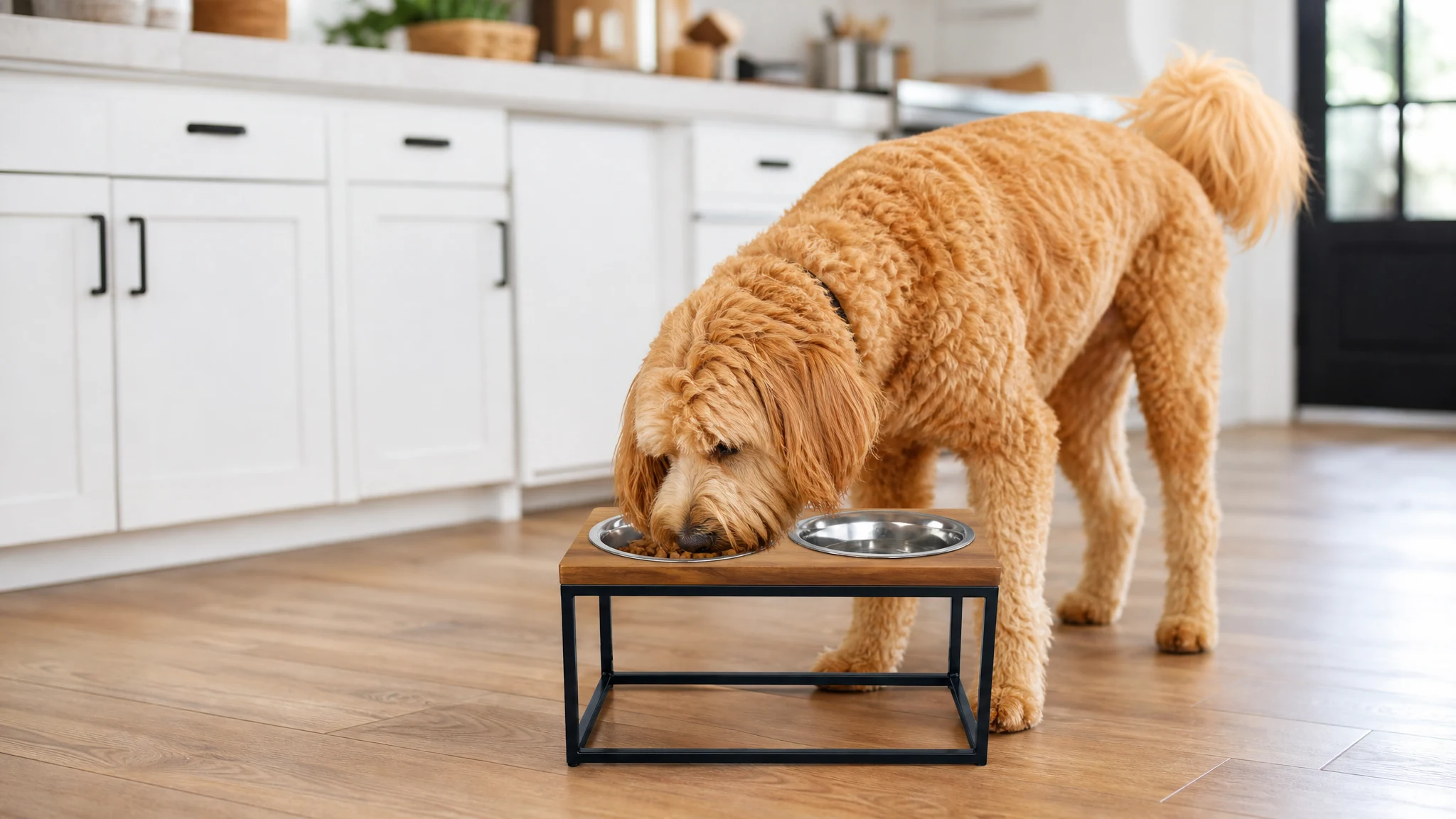
General nutrition information compiled from product labels and published sources, not veterinary advice. Your veterinarian is the right person to choose a diet for your dog, especially one with a health condition.
Some Goldendoodles eat like the bowl is about to be taken away. Others are calm, steady eaters who never need a gadget. A slow-feeder bowl is a bowl with ridges, mazes or raised shapes that make a dog work around the food. It changes how fast the food comes out. It does not change what is in the food.
This guide shows how to decide if one fits your dog, how to set it up, and what to watch for. It is a plain how-to, not a promise. Where the research on slow feeders is thin, we say so.
What a Slow-Feeder Bowl Can and Cannot Do
A slow-feeder bowl spreads a meal out over more minutes. That is all it is designed to do. Owners often use one for dogs that gulp, cough, or bring food back up right after eating.
Here is what we can say honestly:
- It may slow a fast eater. How much depends on the dog and the bowl.
- It can add a little mental work to mealtime.
- It is not a treatment for any condition.
The sources we relied on do not show that a slow feeder prevents bloat, fixes allergies or treats any disease. So we do not claim that. If your dog has a health concern, a veterinarian decides what is right for that individual dog.
Why Goldendoodle Owners Ask About It
Goldendoodles are a cross, so their traits come from the parent breeds. No source we used documents these issues in Goldendoodles as such. Goldendoodles can inherit tendencies from either side, which is why the parents matter.
- Bloat risk from a Standard Poodle parent. The American Kennel Club (AKC) Standard Poodle page says Standard Poodles are more at risk for gastric dilatation with volvulus, also called bloat or GDV. Larger Goldendoodles with a Standard Poodle parent may share some of that background. Bloat is an emergency. If your dog has a swollen belly, retching with nothing coming up, or restlessness after eating, call a veterinarian right away.
- Weight gain from a Golden Retriever parent. The AKC Golden Retriever page notes that some Golden Retrievers can become overweight. A slower meal does not make a dog eat less, so portion control still matters.
- Pancreatitis in Poodles. The Merck Veterinary Manual lists Poodles among breeds with a reported increased prevalence of pancreatitis. Diet choices for a dog with pancreas trouble belong with a veterinarian.
Size matters too. The Goldendoodle Association of North America (GANA) sorts Goldendoodles by height: petite mini (under 14 in, typically 25 lb or less), mini (14 to 17 in, typically 26 to 35 lb), medium (17 to 21 in, typically 36 to 50 lb) and standard (over 21 in, typically 51 lb or more). GANA is a breeder association, not a kennel club, and there is no AKC standard for the breed. Your dog's size changes the bowl, the portion and the setup.
When a Slow Feeder Is Worth Trying
It may be a reasonable experiment if your Goldendoodle:
- Finishes a full meal in well under a minute.
- Gulps and then coughs, gags or regurgitates.
- Guards the bowl or rushes because of competition from another pet.
- Seems bored and wants more to do at mealtime.
It may not be needed if your dog already eats at a steady pace, or if the bowl frustrates them. Some dogs get stressed by a maze. If your dog gives up, paws at the bowl, or eats the food off the floor, try another approach.
If fast eating is new, or comes with vomiting, weight loss, a hard belly or low energy, see your veterinarian before changing the bowl. A slow feeder should not hide a medical problem.
Materials You Need
- A slow-feeder bowl sized for your dog. Pick one with a wide, shallow pattern for a petite mini or mini. Pick a larger, sturdier one for a standard.
- A non-slip mat or rubber base so the bowl does not slide.
- A measuring cup or a kitchen scale for portions.
- Your dog's food and the brand's printed feeding guide.
- A water bowl placed nearby.
- A timer or phone clock to track how long meals take.
Choose a bowl made of a dishwasher-safe, easy-to-scrub material. Food gets trapped in the grooves, and a dirty bowl is not a good idea for any dog. We have not tested specific bowl brands, so we do not recommend one.
Step-by-Step: Setting Up Your Dog Feeding Station
Step 1: Time a normal meal first
Before you change anything, feed one meal in the old bowl and time it. Write down the number. This gives you a baseline so you can tell later whether the new bowl made any difference.
Step 2: Pick a calm spot
A good dog feeding station is a quiet corner on a floor that is easy to clean. Keep it away from foot traffic and away from other pets. Put the mat down, set the slow feeder on it, and place the water bowl beside it.
Step 3: Work out the meal size
The bowl does not change how much your dog should eat. Start with the feeding guide printed by the brand, then adjust for your dog's weight, age and activity. These label guides are starting points only:
- Royal Canin Large Adult lists 2 cups plus 7/8 cup (274 g) per day for a 57 lb (26 kg) adult with low activity.
- Hill's Science Diet Adult Large Breed lists 3 1/4 cups (320 g) per day for a 50 lb (23 kg) dog.
- Hill's Science Diet Adult 6+ Large Breed lists 3 cups (295 g) per day for a 50 lb (23 kg) dog.
- Royal Canin Medium Adult says to feed 2 to 4 equal portions per day.
Cups differ between foods. Hill's lists 391 kcal per cup for its Puppy Large Breed, while Royal Canin lists 349 kcal per cup for its Large Puppy. The same cup of two foods is not the same amount of energy. For a fuller breakdown by age, see our Goldendoodle feeding chart by age.
Hill's says to adjust feeding amounts as needed to maintain optimal weight, and to ask your veterinarian if you are unsure. That is good advice. If your dog has a health condition, confirm amounts with your vet before relying on any chart.
Step 4: Check that the food fits the bowl
Slow feeders work best with dry kibble. The brand pages we reviewed did not list kibble size for the foods named here, so check the bag or the brand's own site. If the pieces are too big or too small for the grooves, the bowl may not work as intended.
Fresh and wet foods are soft and sticky. JustFoodForDogs and Nom Nom both make fresh, frozen foods, and Hill's makes a canned adult food. Their pages give storage and portion information, not slow-feeder instructions. If you want to use a bowl with these, a lick-style mat or a shallow bowl may work better than a deep maze. Ask the brand if you are unsure.
Step 5: Introduce the bowl gently
Put only a small portion in the slow feeder at first. Let your dog sniff and explore. Praise and reward calm behavior. Use reward-based methods only. Never punish a dog for struggling with a new bowl, and never take the bowl away roughly. If your dog seems stuck, simply shake some food loose or switch back to the old bowl for that meal.
Step 6: Fill the bowl and stay nearby
Fill the bowl with the full measured portion once your dog is comfortable. Stay close for the first several meals. Watch for frustration, chewing on the plastic, or swallowing pieces of the bowl. Pick up the bowl when the food is gone.
Step 7: Time the new meal
Compare the time to your baseline from Step 1. If the meal takes longer and your dog seems relaxed, the bowl may be doing its job. If the time barely changes, try a bowl with a more complex pattern. If your dog is stressed, try a simpler one.
Step 8: Keep the rest of the routine steady
Feed at regular times each day. Many owners split the daily amount into two or more meals, and the Royal Canin Medium Adult page itself suggests 2 to 4 equal portions per day. Give your dog a calm period after eating, and avoid hard exercise right around mealtime. Your veterinarian can advise on timing, especially for a larger Goldendoodle with a Standard Poodle parent.
Puppies and Growth
Puppies can use a slow feeder too, but portions and food type matter more than the bowl. Brand pages give different age windows: Royal Canin labels its Large Puppy food for large-breed puppies up to 15 months old, and Hill's labels its Puppy Large Breed food for up to 18 months old.
Growth food labels carry a size statement. Royal Canin Large Puppy, JustFoodForDogs Chicken & Rice and Nom Nom Turkey Fare say their foods are formulated to meet AAFCO nutrient levels for growth including growth of large size dogs (70 lb or more as an adult). The Hill's Puppy Large Breed page uses a feeding-test statement and does not carry that exact phrase. We report the wording as printed and do not infer more than that.
The Merck Veterinary Manual notes that excess calcium is more of a problem for growing large- and giant-breed dogs. Most standard Goldendoodles are large, while petite minis and minis are small dogs. Do not add anything to a puppy's food to "help" growth without asking your veterinarian.
For small puppies, Hill's Science Diet Puppy Small & Mini is labeled for puppies up to 1 year old. Its feeding table lists 1/2 cup (55 g) per day for a 2 lb puppy under 4 months. A tiny puppy may do better with a very shallow bowl than a deep maze.
Tips for Better Results
- Start simple. A gentle pattern first, then a tougher one if your dog handles it well.
- Wash it daily. Grooves hold food and oils.
- Check for wear. Replace the bowl if it is cracked or chewed.
- Weigh portions. A scale is more exact than a cup, especially for dogs prone to weight gain.
- Use the bowl as one tool. Puzzle toys and scatter feeding on a clean floor are other ways to slow a meal.
- Keep treats in the count. Extra rewards add to the daily total.
Common Mistakes to Avoid
- Treating the bowl as a bloat fix. We found no source in our research showing it prevents bloat. Know the warning signs and your emergency vet's number.
- Feeding more because the meal looks small. A maze can make a portion look bigger. Stick to the measured amount.
- Choosing a bowl that is too hard. Frustration can lead to gulping, flipping the bowl or giving up.
- Switching food and bowl on the same day. Change one thing at a time so you know what caused any upset stomach.
- Ignoring a sudden change. New fast eating, vomiting or weight loss is a reason to call your veterinarian.
- Chasing marketing claims. Words like "natural" or "holistic" on a food bag do not tell you how your dog eats. Read the AAFCO statement and the feeding guide instead.
What to Expect
Many owners find that a slow feeder may stretch mealtime and may reduce gulping in some dogs. It might also make mealtime a bit more interesting. Results vary by dog, bowl and food, and some dogs show little change.
It is not likely to change your dog's weight on its own. Weight depends on how much your dog eats and moves. It also cannot treat vomiting, allergies, joint problems or heart disease. If you see no improvement after a couple of weeks, or if your dog seems upset, stop and talk to your veterinarian.
A Note on Food Choice
You may be wondering if the food matters as much as the bowl. It does. No Goldendoodle-specific commercial formula turned up in our research, so foods are generally chosen by your dog's size and life stage. Check that the label has an AAFCO statement for your dog's life stage, and ask your veterinarian about the best fit.
On grain-free diets: the U.S. FDA began investigating reports of dilated cardiomyopathy (DCM) in dogs eating certain foods in July 2018. Its last public update was dated December 23, 2022. A UC Davis release from January 2019 described taurine-deficient DCM in golden retrievers, 23 of 24 of whom had been fed grain-free, legume-rich or combination diets. This does not prove that grain-free food causes DCM. Because a Goldendoodle can have a Golden Retriever parent, it is worth raising with your veterinarian before choosing a diet.
For how we compared foods: we looked at label data from brand pages, such as AAFCO statements, ingredients and calories. We did not run feeding trials or taste tests, and we have not tested slow-feeder bowls ourselves. Check each brand's own page for the latest label details.
Quick Checklist
- Time a normal meal.
- Set up a quiet dog feeding station with a mat and water.
- Measure the portion from the label guide and your vet's advice.
- Check that the kibble suits the bowl.
- Introduce the bowl with a small portion and calm praise.
- Stay nearby and time the new meal.
- Clean the bowl daily and check it for damage.
- Call your veterinarian about any sudden or worrying change.
Sources
- Goldendoodle Association of North America, Goldendoodle Breed Standard
- American Kennel Club, Poodle (Standard)
- American Kennel Club, Golden Retriever
- Merck Veterinary Manual, Pancreatitis in Dogs and Cats
- Merck Veterinary Manual, Nutritional Requirements of Small Animals
- UC Davis, Dogs Fed Some Popular Diets Could Be at Risk of Heart Disease
- U.S. FDA, Investigation into Potential Link between Certain Diets and Canine Dilated Cardiomyopathy
- Royal Canin US, Large Puppy Dry Dog Food
- Royal Canin US, Medium Adult Dry Dog Food
- Royal Canin US, Large Adult Dry Dog Food
- Hill's Science Diet Puppy Large Breed
- Hill's Science Diet Puppy Small & Mini
- Hill's Science Diet Adult Large Breed
- Hill's Science Diet Adult 6+ Large Breed
- JustFoodForDogs Chicken & Rice Recipe
- Nom Nom Turkey Fare